
TECHNICAL GUIDE
Demystifying Oil Viscosity
Grades: ISO VG vs. SAE
Understand the key differences between ISO VG and SAE viscosity grades to confidently select the right lubricant for your industrial equipment.
Technical Guide • 6 min read
When it comes to choosing the right oil for your machinery, understanding viscosity grades is crucial. Viscosity determines an oil’s thickness or flow characteristics, and it’s represented in two primary systems: ISO VG and SAE.
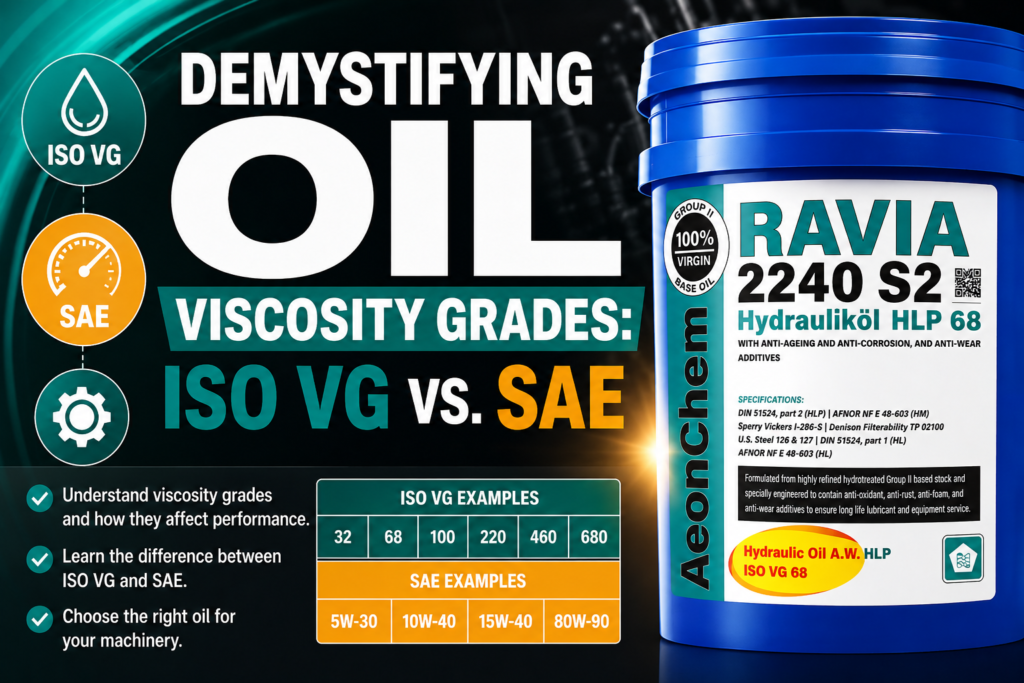
What is ISO VG?
Lower ISO VG (22–46)
Thinner oils that flow easily, ideal for hydraulic systems and applications requiring low friction.
Medium ISO VG (68–150)
Balanced viscosity suitable for gearboxes, circulating systems, and many industrial machines.
High ISO VG (220–1500+)
Thick oils designed for heavily loaded gearboxes, turbines, and demanding industrial equipment.
What is SAE?
Low SAE (0W-20)
Excellent cold-start performance.
Medium SAE (10W-40)
Balanced protection for everyday engines.
High SAE (50)
Designed for heavy-duty engines and high-load applications.
Choosing the Right Viscosity
✔ Manufacturer: Follow your equipment manufacturer’s recommendation.
✔ Temperature: Consider operating temperature.
✔ Load: Account for equipment load.
✔ Application: Match the lubricant to the specific equipment and intended application.
✔ Expert Advice: Consult a lubricant specialist if you’re unsure which viscosity grade is right for your equipment.
TECHNICAL SUPPORT
Need Expert Advice?
Not sure which lubricant is best for your equipment? Our technical team can help you select the right product for your application and operating conditions.